If you’ve been actively searching for internships or entry-level roles recently, especially in tech or data, there’s a good chance you’ve come across something called “Zorvyn FinTech.” Maybe it showed up on a job portal. Maybe you saw a reel claiming ₹40,000 stipend and a ₹14 LPA PPO. Or maybe someone forwarded it in a college WhatsApp group saying “apply fast.”
At first glance, it looks like a dream opportunity.
But here’s the thing. In today’s job market, when something looks too good to be true, it usually deserves a second look. Not panic. Not blind trust. Just a proper, calm verification.
This article is not about calling any company a scam without proof. It is about helping you think clearly, spot patterns, and avoid getting misled in a market where freshers are already struggling.
Why this matters more than ever
Right now, the entry-level job market is extremely competitive. There are more applicants than openings. Companies are becoming selective. Many are cutting costs. Even well-funded startups are being cautious with hiring.
In this kind of environment, a listing that promises:
High stipend
Remote work
No experience required
High salary after internship
…should automatically trigger one question in your head:
“Why is this so generous compared to the rest of the market?”
That question alone can save you from a lot of trouble.
What Zorvyn FinTech claims to offer
Based on publicly available listings, Zorvyn FinTech positions itself as a fintech startup working on areas like payments, fraud detection, and financial automation.
Their internship listings commonly highlight:
₹40,000 monthly stipend
Fully remote work
0 to 1 year experience eligibility
PPO offers going up to ₹14 LPA
Opportunity to work on “real-world fintech systems”
For a fresher, this checks every box. Good money, remote flexibility, and a strong salary jump after internship.
But here’s where things start to feel slightly off.
Understanding the market reality first
Before judging any specific company, you need to understand the baseline.
In the current market:
Most internships for freshers pay between ₹5,000 to ₹25,000
Remote internships with high stipends are rare
PPO salaries are usually not fixed upfront
Unknown startups rarely offer top-tier packages
Even companies with funding and brand value are not offering such aggressive compensation to interns.
So when a relatively unknown company offers significantly more, it is not automatically fake. But it is definitely unusual.
And unusual deserves investigation.
The pattern that keeps repeating
Over the past few years, especially after remote hiring became common, a very specific pattern has started showing up in the job market.
It usually looks like this:
A new or low-visibility company
High-paying internship offers
Mass promotion across job portals and social media
Target audience is freshers and students
Limited verifiable information about actual work or team
Now here’s the important part.
This pattern does not always mean “scam.”
But it does mean “high risk.”
What makes people skeptical in this case
Let’s break down the concerns that multiple job seekers have raised.
1. The compensation mismatch
The biggest trigger is the stipend and PPO combination.
₹40,000 stipend with a ₹14 LPA PPO is something even top startups think twice before offering widely. When a lesser-known company offers it openly to freshers, it raises eyebrows.
Not because it is impossible. But because it is rare.
2. Lack of strong online footprint
When you research established companies, you usually find:
Employee profiles
Detailed company pages
Product demos
Client mentions
Media coverage
In this case, the footprint is limited. You mostly see:
Job listings
Social media promotions
Basic company descriptions
That gap between claims and visible proof creates uncertainty.
3. Heavy social media promotion
A lot of visibility around this opportunity comes from reels, student pages, and mass sharing.
There is nothing wrong with promotion. Every company markets itself.
But when hype is significantly higher than verifiable substance, it becomes something you should question.
4. No strong employee validation
One of the simplest ways to verify a company is to check if real people are working there and talking about their experience.
In strong companies, you will find:
Employees posting about their work
Interns sharing their journey
Alumni mentioning their experience
In cases like this, such validation is either limited or hard to find.
That does not prove anything on its own, but it does add to the uncertainty.
The bigger issue: Not just one company
Here’s something most people miss.
Even if you ignore this specific case, the larger issue still exists.
There has been a rise in job-related scams and misleading opportunities in India, especially targeting:
Fresh graduates
Students from tier 2, tier 3, tier 4 colleges
People switching careers
Job seekers desperate for their first break
These scams are getting smarter.
They don’t always ask for money upfront. Some of them:
Give assignments and disappear
Offer unpaid trial work
Promise PPO but never convert
Collect data and use it for other purposes
So the real problem is not one company.
The problem is a system where job seekers are not trained to verify opportunities.
How to evaluate opportunities like this
Instead of asking “Is this a scam or not,” ask better questions.
1. Does the compensation make sense?
Compare it with:
Similar roles
Similar companies
Market trends
If it is significantly higher, ask why.
2. Can you verify the company’s work?
Look for:
Product or service details
Actual usage or clients
Technical presence, GitHub, demos, case studies
If everything is generic, be cautious.
3. Are real people associated with it?
Check:
LinkedIn employees
Founders’ background
Team size and activity
A real company leaves digital footprints through people.
4. How professional is the hiring process?
A genuine process usually includes:
Proper interview rounds
Technical evaluation
Official communication
Red flags include:
Instant selection
No real interview
Communication only through WhatsApp or Telegram
5. Are they asking for money?
This is the simplest rule.
Any company asking you to pay for:
Internship
Training
Equipment
Security deposit
…should be avoided immediately.
No exceptions.
What I would advise as someone working closely with job seekers
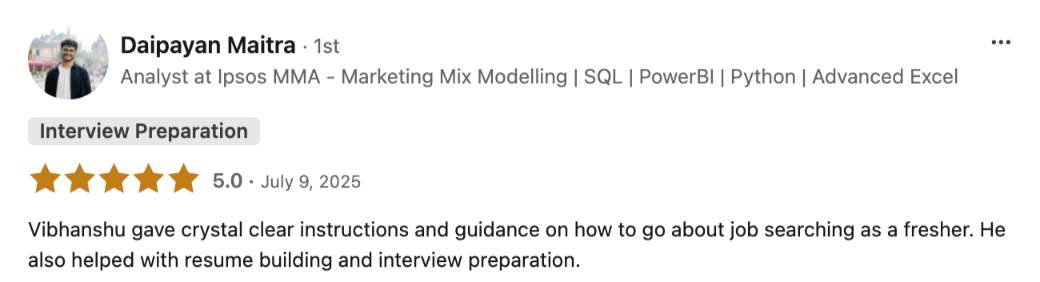
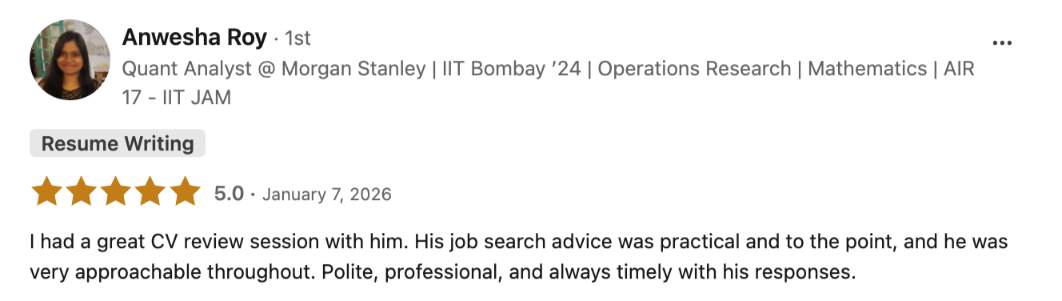
From experience of running a job platform and interacting with thousands of candidates, here’s the honest truth.
The biggest mistake freshers make is chasing:
High stipend
Fancy titles
Big promises
Instead of focusing on:
Learning
Real experience
Credible brand names
In the long run, the second category wins every single time.
Even a ₹10,000 internship at a genuine company is better than a ₹40,000 offer that leaves you confused, unpaid, or without real work.
A balanced conclusion
Let’s be fair.
There is no confirmed public proof that labels Zorvyn FinTech as a scam.
At the same time, there are enough signals that suggest you should not blindly trust the opportunity.
So the correct position is neither blind trust nor blind rejection.
It is informed caution.
Final takeaway for job seekers
If you remember just a few things from this article, let it be these:
High pay with low requirements is always a signal to investigate
Hype should never replace verification
Your first job matters more for learning than salary
Never pay to get a job
Always trust logic over emotion
And most importantly:
You are not missing out if you skip a risky opportunity.
There will always be better, safer, and more meaningful opportunities if you stay patient and focused.
The job market is tough right now, no doubt. But that also means you need to be smarter than ever.
Not every opportunity deserves your application.
Choose wisely.





 Daily job updates on WhatsApp, Click here